The Electoral Awareness Forum Holds a Meeting to Present the Findings and Recommendations of Research on Electoral Violence in the 2025 Iraqi Parliamentary Elections
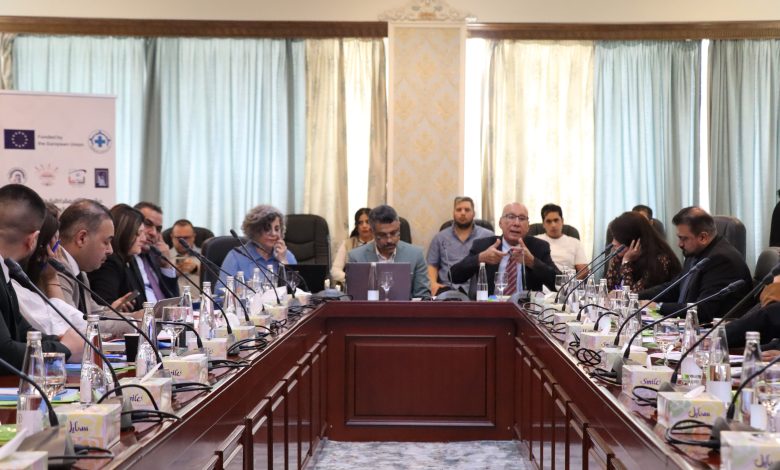
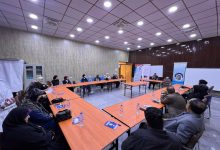
The Electoral Awareness Forum, managed by Tammuz Organization for Social Development and the Shams and Ein Election Monitoring Networks, organized a meeting to present the findings and recommendations of research on electoral violence in the 2025 Iraqi Parliamentary Elections. The meeting was held as part of the “Democracy and Transparency: Empowering Civic Participation and Media Freedom” project, implemented in partnership with Norwegian People’s Aid (NPA) and funded by the European Union, on Monday, 6 July 2026, in Baghdad.
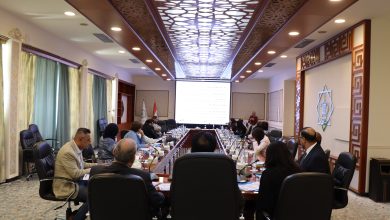
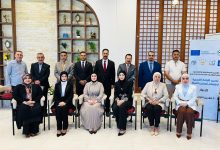
The meeting was attended by Electoral Commissioner Judge Amer Mousa Al-Husseini, accompanied by a delegation from the Independent High Electoral Commission (IHEC), as well as representatives of the Federal Commission of Integrity, the Ministry of Interior, the Sunni Endowment Diwan, the Women’s Directorate at the General Secretariat of the Council of Ministers, the Human Rights Commission, and a number of professional syndicates, unions, and civil society organizations.
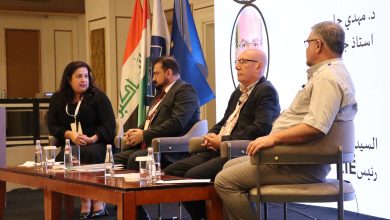
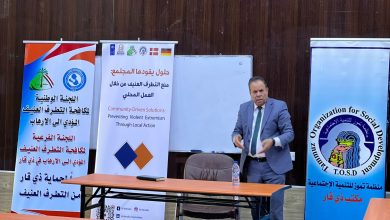
The meeting featured presentations of three research papers addressing the main manifestations of electoral violence during the 2025 Iraqi Parliamentary Elections. Dr. Mahdi Jaber Mahdi presented an analytical paper on electoral violence and the experience of parliamentary elections in Iraq. Dr. Asmaa Jameel Rasheed presented a paper examining violence against women in the context of Iraq’s 2025 elections, while Dr. Wael Mundhir presented a paper on hate speech as a tool of political conflict and its impact on influencing Iraqi voters’ electoral choices.
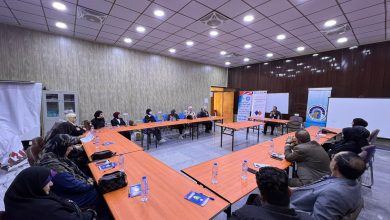
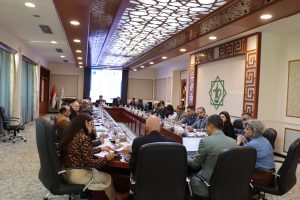
The meeting also included extensive discussions among participants on the key findings of the research papers. Participants exchanged views on the causes of electoral violence and its impact on the integrity of the democratic process, while discussing a number of recommendations aimed at reducing electoral violence and hate speech, promoting women’s participation in the electoral process, and improving the electoral environment in ways that strengthen the principles of integrity and transparency and support the conduct of fairer and more secure elections in the future.