
Tammuz Implements a Session to Discuss the Sixth Global Report on Adult Learning and Education (GRALE 6)
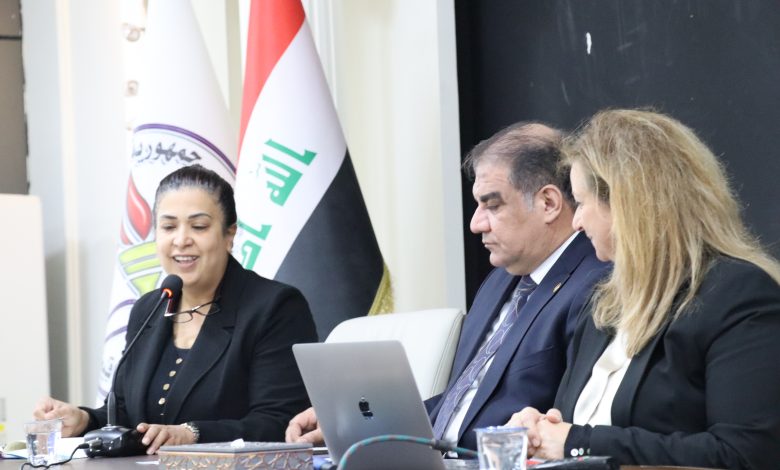
Under the patronage of the Iraqi Teachers Syndicate – General Center, and in cooperation with Arab House for Adult Education – AHD, Tammuz Organization for Social Development implemented a session to discuss the Sixth Global Report on Adult Learning and Education (GRALE 6), on Tuesday, 23 December 2025, at the Iraqi Teachers Syndicate Hall in Baghdad.
The session was attended by Mr. Uday Hatim Al-Issawi, President of the Iraqi Teachers Syndicate, along with a number of academic and educational figures, individuals interested in the field of adult education, as well as representatives of civil society organizations.
The session agenda included discussions across four main themes. Mr. Ammar Rafi’, Deputy Director General for Technical Affairs at the Literacy Authority, was hosted to speak on the theme “Adult Education: Procedures and Challenges – The Experience of Iraq.” Ms. Mithal Al-Azzawi, an expert in adult education, delivered a presentation on “Adult Education in the Face of Climate Change and Environmental Challenges,” while Mr. Hussein Mahmoud, a specialist in the digital field, delivered a lecture on “Adult Education and Digitization.”

As for the theme “Adult Education and Economic Transformations,” it was addressed by economics professor Muzaffar Hasani, in addition to an intervention by the official spokesperson of the Ministry of Education, Mr. Karim Al-Sayyid, who discussed the theme “Adult Education in Contexts of Crises and Armed Conflicts.”
Following the completion of the thematic discussions, participants were divided into four working groups, each assigned to discuss one of the presented themes. The groups identified key challenges and proposed recommendations, to be documented by Arab House for Adult Education as part of the Sixth Global Report on Adult Learning and Education (GRALE 6).

The working groups produced a set of recommendations, most notably emphasizing the need to develop adult education, particularly in the fields of digitization and e-learning, by bridging the knowledge gap in the use of technology, adopting clear governmental plans to establish digital learning platforms, and providing training opportunities aligned with labor market requirements, in addition to enhancing awareness of protection against blackmail and cyberattacks. The recommendations also stressed the importance of improving the quality of education in times of crisis through developing teaching staff, increasing financial support for the education sector, upgrading infrastructure, enforcing more effective oversight of private education, and creating an attractive and motivating learning environment for learners.


